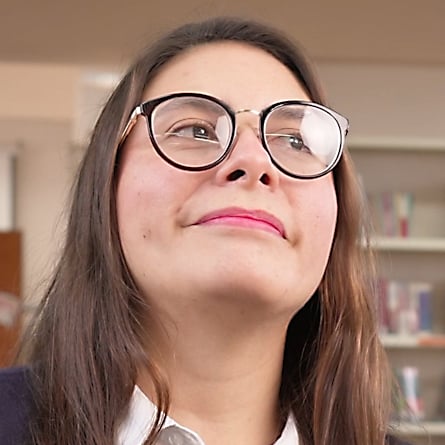
ANDREA MEDINA
Science Teacher
Magister School
Lima, Peru
My name is Andrea Medina García, and I teach first-, fourth-, and fifth-year middle and high school students at Magister School. I also mentor students as they prepare their research monographs for the International Baccalaureate Diploma Programme. At our school, we have a very clear goal: striving for excellence. For us, educational excellence means far more than helping students acquire knowledge. It means supporting their overall development by nurturing their emotional, cognitive, and personal growth.
Since 2020, I have used Science Bits as part of my middle school science instruction. When I began looking for new instructional materials, I wanted resources that would help me achieve my learning objectives while actively engaging my students in the learning process. As I explored the platform and discovered the wide variety of digital instructional resources it offered, I realized I had found exactly what I was looking for.
Since then, I have watched my students move from being passive recipients of information to becoming active participants in their own learning. Science Bits sparks their curiosity and motivates them to understand, investigate, and discover new knowledge. In fact, when I walk into class, students often ask me, «Are we using Science Bits today?«
Although I was not initially familiar with the 5E instructional model, I soon recognized how closely it aligned with the competencies emphasized in our own educational context: inquiry, explanation, and design. That connection allowed me to integrate the platform’s methodology into our existing instructional approach and create far more meaningful learning experiences.
One of the greatest strengths of Science Bits compared with other instructional resources is that Science Bits builds on each student’s prior knowledge, supports them throughout the learning process, and help them construct their own knowledge so they can later apply it. In addition, progress is gradual, allowing me to observe how their learning and performance evolve.
Over time, I have also noticed a clear difference between students who have used the platform for several years and those who are just beginning. Students with more experience demonstrate stronger inferential reasoning, think more critically, and are better able to develop their own scientific explanations.
For that reason, I would recommend Science Bits to any teacher looking to transform science education in middle schools across Latin America. In my experience, it is a resource that not only promotes active and meaningful learning but also helps develop students who are more curious, more independent, and more capable of thinking for themselves.